
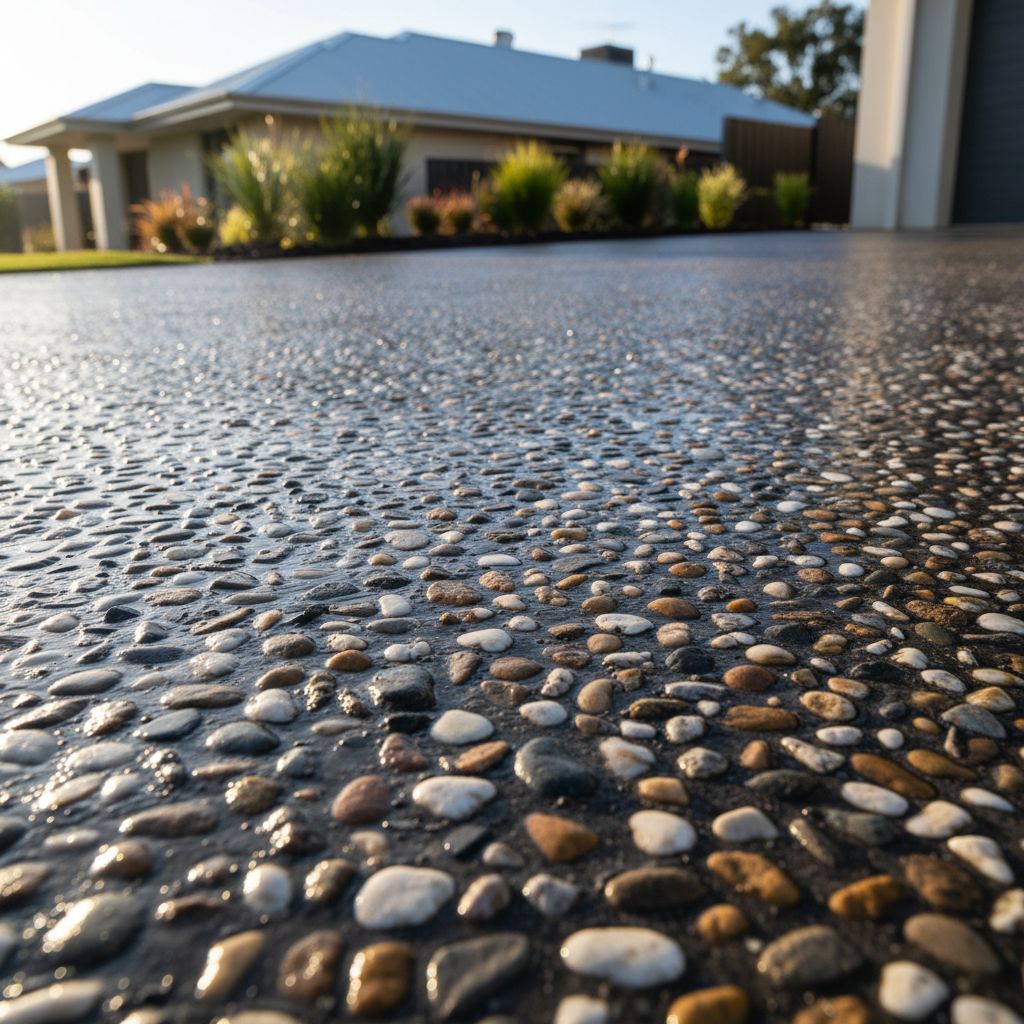
Start with the appearance you actually want
An exposed aggregate driveway combines visible stones with the surrounding cement paste. A sample described simply as grey can contain warm brown, cream, charcoal and pale stones, each changing the overall impression. Decide whether you want a quiet background to the house or a visibly patterned surface. Photograph the brickwork, garage door, front fence and any existing path together. Those fixed colours are more useful reference points than a photograph of a driveway beside a completely different building.
Write down what attracted you to the reference image. It might be the small stones, the pale background, a narrow dark border or a low sheen. This separates several decisions that are easily confused when someone asks for the same driveway as the picture. It also helps a supplier suggest an available mix without claiming an exact match to an unidentified photograph. Keep the reference image and the written reasons together in your project folder.
For an Officer home, consider the driveway as part of the whole front approach. A small sample held against the garage door may look balanced while a large expanse of that colour feels very different. Ask for an opportunity to view a larger display of the proposed finish. View it from normal standing distance as well as close up, because the overall tone and the individual stone colours answer different questions.
Identify the mix behind the sample
A useful sample has a supplier, product or mix reference and a description of its finish. Without those details, it is only inspiration. Ask whether the sample represents a currently available mix in your region and whether its appearance includes a sealer. Record when you viewed it and photograph its label. If two contractors propose similarly named products, compare the actual supplier references rather than assuming that matching names mean matching materials.
Boral's exposed aggregate product information recommends physical samples for final colour selection and explains that natural quarry materials introduce variation between batches. Treat that as a reason to discuss an acceptable range, rather than asking a contractor to reproduce every stone in a small sample. The supplier's current information for the selected mix should accompany the final specification, particularly if availability changes before the pour.
Separate the decorative choice from the pavement design. A mix name does not tell you the required slab design, ground preparation, joints or drainage arrangement for your property. Ask which details belong to the supplier's material specification and which belong to the contractor or designer's site proposal. This makes it easier to compare alternatives without allowing an attractive sample to stand in for a complete driveway scope.
Compare colour in consistent conditions
Compare candidate samples beside one another under the same lighting. If one is wet and another dry, or one is indoors while another is in direct sunshine, you are changing more than the material. Note the conditions when you take photographs. Screen brightness and camera processing can make a dark background appear lighter or exaggerate warm stones, so use the photographs to remember the comparison rather than as the final colour authority.
Look from the street-facing end, the garage and any window overlooking the driveway. A surface that appears restrained from the kerb can become visually busy when viewed close to a living room. Consider existing planting as well. A mix with strong warm tones may connect with brickwork but compete with another decorative stone feature. You do not need everything to match; you need a deliberate relationship between the permanent materials.
Keep a shortlist instead of repeatedly adding new options. For each candidate, write one reason to choose it and one concern to resolve. For example, a pale background might suit the facade while showing leaf marks more obviously. A darker mix may look appropriate beside charcoal windows but warrant closer discussion of summer exposure and maintenance. These are project questions, not universal conclusions about every pale or dark concrete product.
Discuss texture separately from colour
An attractive stone mix is not enough if the finished texture does not suit the way you use the driveway. Tell the contractor where people walk between the car and front door, where bins travel and whether small wheels regularly cross the surface. Ask to inspect the proposed finish rather than a sample with a different exposure treatment. The visible amount of stone and the feel of the surrounding surface should be part of the discussion.
Avoid judging slip performance from a photograph or from how rough a dry sample feels. Ask the supplier or contractor what evidence supports the proposed finish for the intended conditions, including slope, water exposure and any sealer. The finished system matters. If someone proposes a different coating later, ask whether that changes the original performance advice. A general description such as textured should not close the conversation about suitability.
Where a driveway also provides the main pedestrian approach, discuss whether the walking route should be distinguished through layout or an adjoining surface. That decision may affect borders, joints and the position of drainage. It is easier to coordinate these details before the finish is chosen than to add a narrow path after the driveway geometry is fixed. Explain the household's actual movements rather than asking for a generic premium finish.
Put borders and joints on the same drawing
A border can frame the aggregate field, connect the driveway to a front path or separate it from a different surface. It also introduces another colour, edge and construction interface. Draw the proposed border width and show how it turns at the garage, gate and street end. A line that looks neat on a rectangular sample board may become awkward where the driveway tapers or meets an angled boundary.
Ask for the intended joint arrangement to appear on the layout before accepting a decorative pattern. The designer or contractor should determine the technical joint requirements; your role is to explain the visual priorities and understand where the lines will be visible. Do not assume a decorative border removes the need for other joints. A drawing helps everyone recognise whether the finished surface will read as one large field or several smaller panels.
Also mark drainage grates, service covers and the junction with existing concrete. These details can interrupt the aggregate pattern more noticeably than a subtle colour variation. Ask how each cover will remain accessible and how the surrounding finish will be treated. If part of the old driveway stays, make the transition intentional. A defined junction is easier to discuss than an expectation that new and weathered concrete will become visually indistinguishable.
Understand the sealer decision before approval
Ask whether the appearance you approved is bare concrete, newly sealed concrete or an older sealed display. A coating can change the perceived colour and sheen, so it should not arrive as an unexplained final step. Request the proposed product name and the manufacturer's care information. Discuss whether a sample or demonstration of the complete finish is available, especially where a glossy display is influencing your selection.
Maintenance expectations belong in this conversation. Ask what ordinary cleaning is appropriate, which products should be avoided and how a future recoat would be assessed. Do not accept a calendar interval as the only maintenance instruction, because exposure, wear and the particular coating matter. Keep the product details so that a future contractor can identify what is already present instead of guessing or applying an incompatible treatment.
If stain resistance is a major reason for choosing a coating, explain the likely exposure: parked vehicles, a nearby barbecue, garden debris or regular bin traffic. Ask what the product is intended to resist and what still requires prompt attention. Avoid home experiments with solvents, acids or mixed cleaners. A finish problem is better assessed with the material record and clear photographs than with an unrecorded series of treatments.
Plan pours and later additions realistically
If you expect to build a carport, widen the driveway or replace a front path later, show that future work on the initial sketch. A staged project may need a planned termination line and a different visual treatment for the later section. Discuss what can be recorded now to help a future contractor, including the supplier, mix reference, finishing method and coating. Records improve the brief without promising an invisible future match.
Hypothetical example: a household wants a new exposed aggregate driveway now and a paved path after landscaping. They choose a simple driveway field and reserve a clearly defined path connection. The paving colour can then be selected against the finished driveway rather than guessed from a brochure. The useful decision is the planned junction, because it avoids treating the future path as an accidental patch at the front door.
Construction access may also shape the sequence. Ask where deliveries, equipment and workers will move, which existing surfaces need protection and when the area can return to its intended use. Get the release conditions from the contractor for the actual concrete and coating system. Do not use a generic internet timeline to decide when to park on a new surface. Include temporary household access in the scope before work begins.
Agree what will be reviewed at handover
Keep the selected sample reference and agreed drawing available when reviewing the completed driveway. Compare the work with the documented proposal, including borders, joint positions and treatment around covers. Take an overall photograph as well as close views of anything you want explained. A close-up without context can make it hard to identify where an issue sits or how extensive it is.
Ask the contractor to explain any visible variation and the stage at which the surface should be reviewed for its settled appearance. Record concerns while the work is fresh, but avoid diagnosing every colour difference as a defect from a single photograph. The supplier's product information and the project's agreed finish provide a better basis for discussion. If a technical concern remains unresolved, request an appropriate independent assessment rather than experimenting on the surface.
Finish your brief with the decisions still open: mix identity, finish, sealer, joint layout or staging. Send those questions with your site photographs through the existing enquiry page, or use the phone link to discuss them. For the wider construction scope, read the driveway paving service page. A documented finish choice helps the site assessment concentrate on the details that a sample alone cannot answer.
Prepare your project brief
Use this sample-selection record to separate decisions already made from questions about the finished surface. Tick what you have documented. Nothing is sent from this tool.
Review the mix identity, finish and layout items before approving a sample.